www.ALEPHTECHNOLOGY.com; call 416.944.9730

The New City Shul Siddur:
Shirat HaLev

The Rabbis ask, "how can we serve God with our hearts?" since we don't need
to use our heart to bring sacrifices. Their answer is, that prayer (in Hebrew,
avodah she-balev), is the service of the heart. (The Hebrew word avodah in
modern Hebrew means work, but in biblical and rabbinic texts, it refers to
Divine service.) Shirat HaLev (Song of the Heart) is the name of City Shul's new siddur.
The cover graphic is a siddur/book outline that contains the shape of a heart. This captures the creative tension between the content of the book (keva: the words from tradition and included newer texts) and our individual and communal spirituality that we bring to the worship experience (called kavannah:
the inner devotion). Our siddur is never finished, as we continually bring novel insights and new understandings each time we open the book and each time the book opens our hearts.
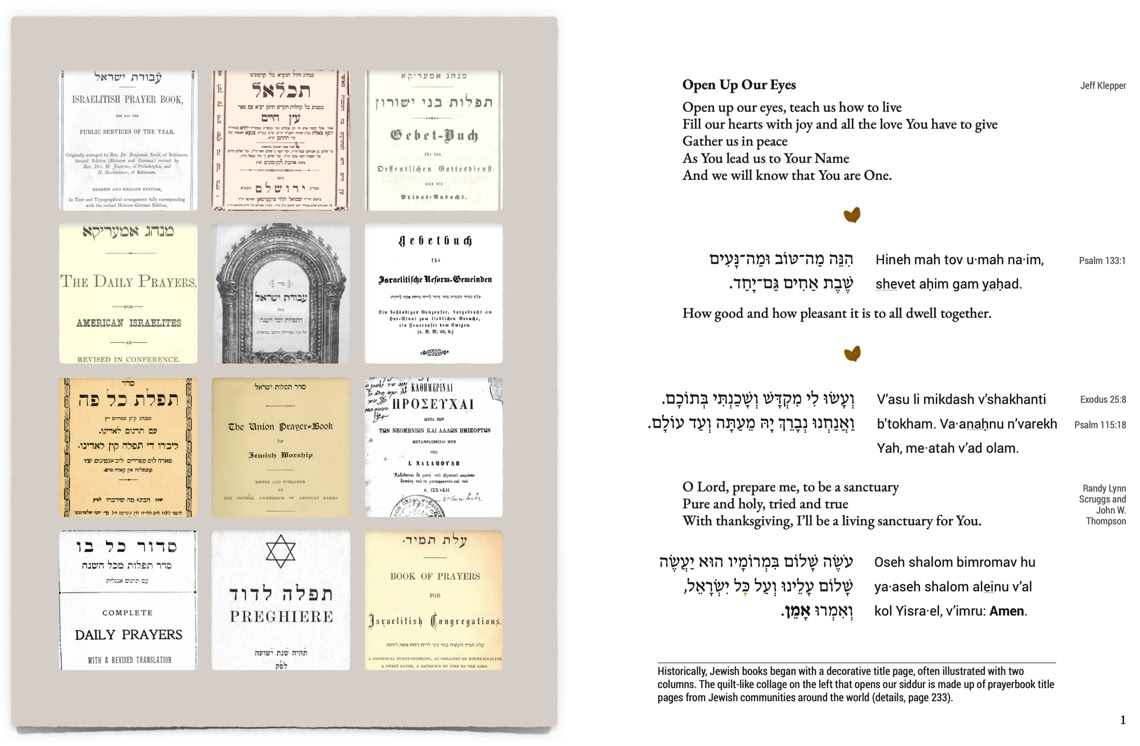
Designing the right opening spread (pg. 1!) of the prayerbook was very important. After much thought and effort, we decided to create a collage of opening pages from many liberal and historical siddurim. We thought this quilt-like image was appropriate and perfect: many manuscripts begin with a page called the “carpet” page. And a quilt is a fitting metaphor for the siddur. Quilts are made by cutting and pasting scraps of fabric (often family heirlooms) and passed on from generation to generation. The 12 boxes may also remind viewers of a stained glass window, and the use of 12 images was chosen deliberately to recall the ḥoshen of the High Priest (often represented on Torah shields or mantles). On the next page, are the poems, “Praying” by Mary Oliver: “It doesn’t have to be // the blue iris ….” and “You Reading This, Be Ready” by William Stafford, which help the reader get into the right frame of mind when entering prayer.
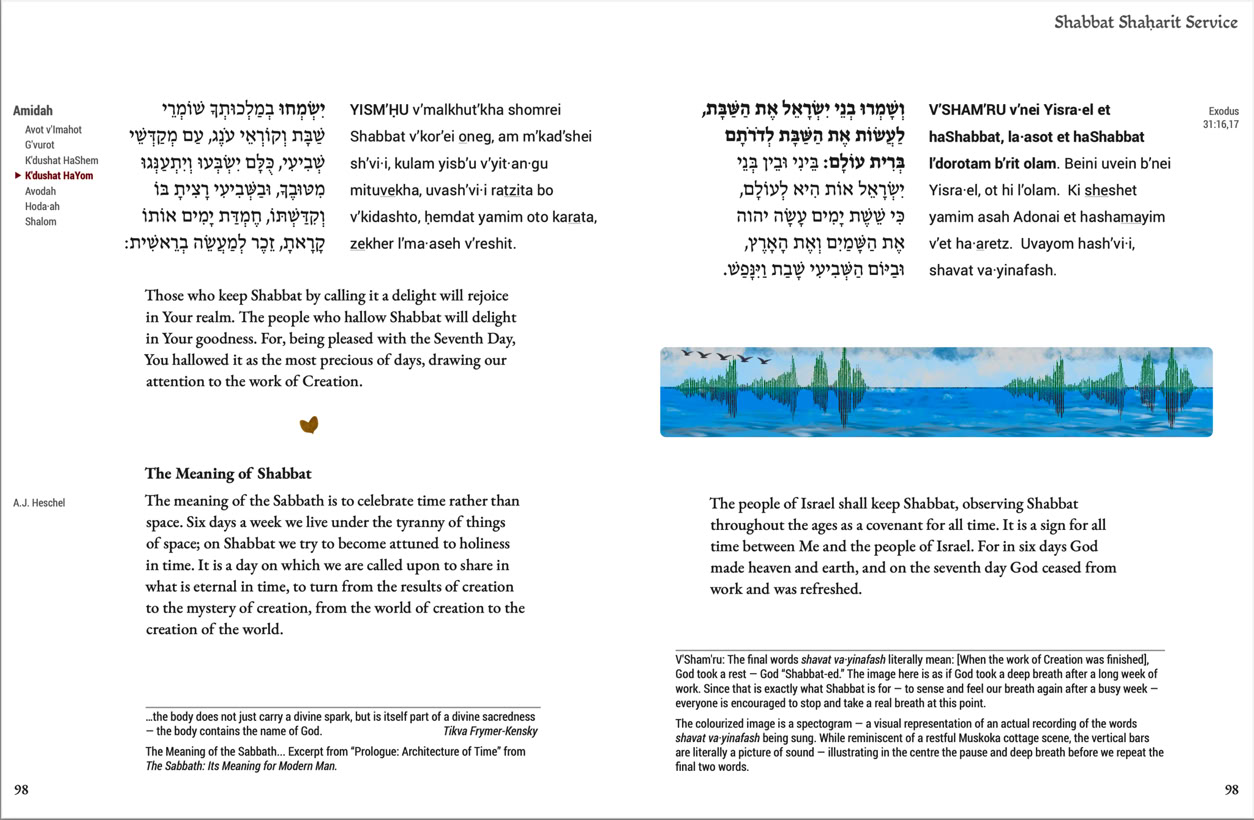
Below, is a page from the Shabbat morning service. At City Shul, the traditional tune for the V’shamru prayer is sung with one important change: before repeating the final phrase, “shavat vayinafash” (God rested/ceased and was refreshed) worshippers are invited to take a deep breath. It is unusual and such an important trademark of City Shul prayer, we wanted to represent that pause.
The restful lake image actually contains a spectogram — a visual representation of an actual recording of the words shavat va·yinafash being sung. While reminiscent of a restful Muskoka cottage scene, the vertical bars are literally a picture of sound — illustrating in the centre the pause and deep breath before we repeat the final two words.